



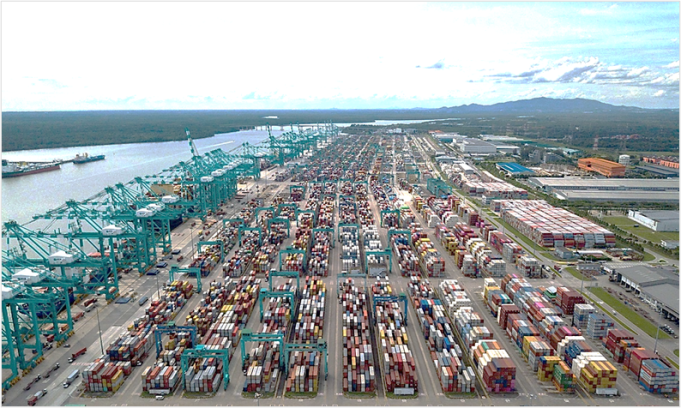
THE United States has recently decided to put a 25% tax, called a tariff, on many products that Malaysia exports to the US. This move, announced by President Donald Trump, has caused concern because it affects a wide range of Malaysian goods and could hurt the country’s economy.
Malaysia’s manufacturing industry, which makes up about 23% of the country’s total economic output, could face serious problems. Important products like electronics, machines, and rubber items, which bring in a lot of money from exports, are especially at risk. Experts warn that Malaysia’s economic growth might slow down from 5.0% to as low as 4.0% if the situation gets worse, with these tariffs possibly reducing growth by 0.4%.
This tariff will have several effects right away. Malaysian companies that export goods to the US might have to pay some of the extra costs themselves to keep their prices competitive. This means they could earn less money, which might lead to job cuts and lower confidence from investors.
Also, because other countries are facing similar tariffs, they might send their products to Malaysia instead, increasing competition and possibly flooding the local market with cheaper goods. This could harm local businesses and make the economy less stable.
The Malaysian government is reacting carefully but actively. Prime Minister Anwar Ibrahim has said that the government will study which industries will be hit hardest. Malaysia is also planning to work with other Southeast Asian countries through ASEAN to find a regional solution, although it’s difficult because each country has different interests.
Instead of fighting back with tariffs of its own, Malaysia prefers to talk and negotiate with the US. The Ministry of Investment, Trade, and Industry has said it wants to keep a fair and balanced trade relationship with the US, which is Malaysia’s third biggest trading partner, making up over 11% of Malaysia’s total trade.
Experts say Malaysia needs to speed up important changes to its economy to be stronger in the long run. This includes finding new countries to sell products to, so Malaysia doesn’t rely too much on the US. It also means improving how things are made at home and helping industries that are struggling by giving them financial support or tax breaks.
The government should avoid raising costs for manufacturers, like increasing taxes or electricity prices, because that would make things harder for exporters. Malaysian trade officials are already talking with their US counterparts to understand the tariffs better and to ask for some relief. They are also preparing plans to help the industries affected.
This new tariff is part of a bigger US plan to use trade taxes as a way to get better deals from many countries. Malaysia is not the only one facing this; countries like Japan, South Korea, Indonesia and Thailand are also affected. Even though ASEAN countries could work together, their different economies and priorities make it hard to act as one group. This means Malaysia has to handle much of this challenge on its own.
Despite these difficulties, Malaysia’s response has been practical and hopeful. By focusing on talks, working with neighboring countries, and making changes to the economy, Malaysia hopes to reduce the damage from the tariffs and build a stronger economy for the future. The strength of Malaysian businesses, along with government help and smart diplomacy, will be key to getting through this tough time and keeping the country’s economy healthy in a world where trade is becoming more difficult.
 By: Assoc. Prof. Dr. Khairunneezam Mohd Noor, Associate Fellow, Islamic Science Institute (ISI), cum Senior Lecturer, Da’wah and Islamic Management Program, Faculty of Leadership and Management, Universiti Sains Islam Malaysia