




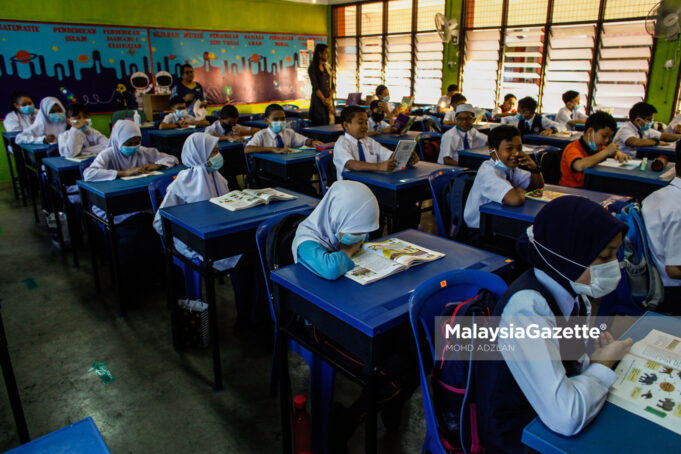
AS Malaysia moves towards a digitally enabled and inclusive society, one question remains at the center of our path. How can we ensure quality education for all in an age defined by rapid technological change? Artificial Intelligence (AI), once the domain of science fiction, is now finding its way into our classrooms—and it may be the solution to unlocking Sustainable Development Goal 4 (SDG 4): Quality Education.
AI is no longer the buzzword that it used to be; it has already begun changing the way education is imparted worldwide. From customized learning platforms, smart tutoring systems, and data-driven insights, AI offers the ability to customize education based on the pace, learning ability, and need of every learner.
According to UNESCO world review, learning outcomes can be significantly enhanced with AI-driven tools, especially for students who are often left behind by traditional, one-size-fits-all approaches. AI, with its real-time monitoring of students’ performance, can recommend customized exercises, identify knowledge gaps, and intervene timely.
This is particularly important in Malaysia, which has rural-urban education gap as a concern. In schools in rural areas—especially Sabah and Sarawak the students are typically deprived of well-experienced educators and quality teaching materials. AI can fill the gap by presenting adaptive learning material and virtual guidance where human capability is lacking.
Malaysia’s moves to mainstream AI in education coincide with the country’s Malaysia Madani policy agenda, which places emphasis on sustainability, digitalization, and equitable growth. Under the Ministry of Education’s Digital Education Policy 2021–2025, the nation is advocating for “smart classrooms” that leverage digital tools, AI systems, and mixed-learning spaces.
Simultaneously, the National Artificial Intelligence Roadmap 2021–2025, spearheaded by the Ministry of Science, Technology and Innovation (MOSTI), outlines AI’s role in national development, including its application in education and skills training. One key objective is to cultivate AI literacy among students and educators, preparing the next generation for an increasingly automated workforce.
While large-scale deployment is still in progress, Malaysia has seen promising early efforts. For instance, Pandai, a local edtech platform, uses AI to tailor quizzes and content to students’ performance, helping them revise more effectively. The app has been widely adopted among secondary school students, particularly those in B40 families, as it works seamlessly on smartphones—bridging gaps where computers and tuition are unaffordable.
In 2024, the Experience AI initiative, in collaboration with the Raspberry Pi Foundation, was piloted in Malaysian schools. This program introduced students to the fundamentals of AI and its real-world applications in solving environmental and societal issues. Students reportedly gained a clearer understanding of how AI works and how it can be used ethically and effectively
Globally, education AI is gaining momentum as a strategic tool to realize UNESCO’s Education 2030 Agenda. In Paris, at the 2024 Global Education Meeting, Malaysia was highlighted as a regional leader in adopting AI early to facilitate education continuity during the Covid-19 pandemic. Such global guidelines focus on inclusive, equitable, and lifelong learning—goals that can be made possible through AI if utilized responsibly. Despite its promise, AI integration isn’t without hurdles. Internet access and digital device ownership remain unequal, especially in rural areas. A 2023 MCMC report showed that only 63% of rural schools had reliable internet connections.
Moreover, ethical issues around data protection, bias in algorithms, and over-reliance on automation will not be left out. Teacher ought to be augmented and not replaced by AI. Invest in upskilling teachers digitally and in establishing explicit ethical guidelines for AI adoption in schools. Given that Malaysia hopes to become a high-income society in the year 2030, education is our most valuable asset. AI could also be the driving force which could transform the way we teach and learn, and the way we access opportunity as well as join the world’s knowledge-based economy.
Ahmad Hakim Bin Hassanuddin
First Year, Bachelor of Computer Science
Kulliyyah of Information and Communication Technology (KICT)
International Islamic University Malaysia