

AS Malaysia prepares to roll out a sweeping expansion of the Sales and Services Tax (SST) on 1 July 2025, policymakers must confront an uncomfortable question: Are we compromising national food security in pursuit of short-term revenue gains?
The Ministry of Finance argues that the expanded SST, which broadens the tax base and updates taxable goods and services, is necessary to strengthen the government’s fiscal position. But in doing so, it risks overlooking deeper vulnerabilities in our economic structure, especially in the realm of food imports and household food access.
For a country that imported over RM75.6 billion in food in 2022, according to Department of Statistics Malaysia (DOSM), this new tax regime could be a costly misstep.
A nation that eats what it doesn’t grow and now pays tax for it
Malaysia’s dependency on food imports stems not just from market preference but also agricultural constraints. We simply cannot produce certain items commercially, in sufficient volume, or at all.
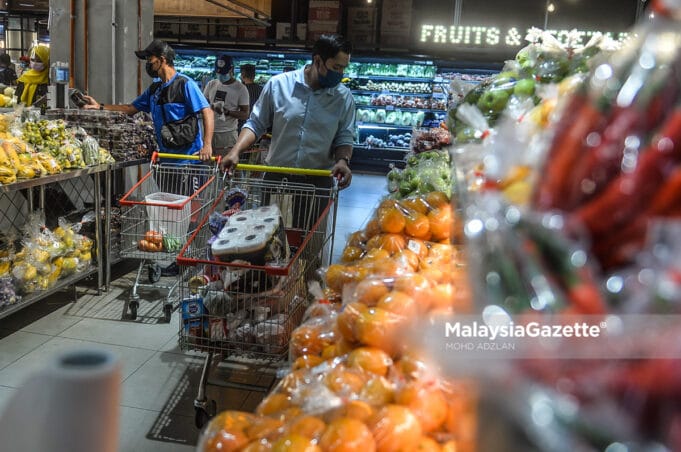
According to DOSM’s Supply and Utilisation of Agricultural Commodities report, Malaysia continues to rely heavily on imports for key foods such as apples (imported at 236,877 tonnes), oranges (176,210 tonnes), grapes (85,267 tonnes), wheat (1.74 million tonnes) and potatoes (242,489 tonnes) in 2023. These are not exotic indulgences but everyday staples.
Yet, under the expanded SST effective 1 July 2025, many of these very items, particularly temperate fruits and imported cereals, are now subject to a 5% sales tax.
Despite government clarification that local produce remains exempt, the expansion of the 5% tax to imported fruits and processed foods, including canned goods, sauces, spices and dried ingredients will have a cascading effect on the food supply chain. Restaurants, caterers, food manufacturers and consumers will all feel the pinch.
This reliance is not just economic, it is a food security issue. When prices of imported food go up, the affordability and accessibility of basic nutrition for millions of households are compromised. And yet, instead of addressing this dependency, the government has chosen to impose a sales tax on many of these imported foods, not because they are luxuries but because they are not grown locally.
This tax doesn’t just increase retail prices. It further exposes our fragile food supply chain on food items we do not and cannot feasibly grow ourselves to both fiscal and inflationary pressure.
By applying SST to food that is imported out of necessity, not luxury, the government risks triggering artificial price shocks. Worse still, in the name of fiscal sustainability, it could erode Malaysia’s long-standing commitment to price stability and food security.
This decision also raises deeper questions about strategic planning: Where is the policy coherence in penalising imported food while still failing to close the agricultural output gap that forces those imports in the first place?
A hidden tariff that breaks our trade promises
While SST is not technically a tariff, its effects resemble one. Imported goods, especially food, are now subject to additional tax burdens that domestic items avoid.
For our FTA partners, this raises red flags. Under agreements such as the CPTPP and RCEP, Malaysia is bound by commitments not to introduce trade-distorting measures. Yet, by applying sales tax selectively on imported goods while exempting local ones, Malaysia risks violating the national treatment principle embedded in its free trade agreements.
These actions may be interpreted as disguised protectionism. Worse, they could prompt our partners to impose their own barriers in retaliation. As a trading economy, this is a risk Malaysia can ill afford, particularly in current uncertain times in view of current negotiations concerning U.S. tariffs.
Revenue versus resilience
According to analyst briefings, the SST expansion could generate as much as RM10 billion in additional government revenue annually. However, no amount of revenue justifies policies that make food less affordable and undermine food sovereignty.
This concern is echoed by the Associated Chinese Chambers of Commerce and Industry of Malaysia (ACCCIM), which has called for a deferment of the SST expansion due to its inflationary impact and poor timing amidst global economic uncertainty. PwC Malaysia, too, highlights the cascading cost effect on SMEs, consumers and trade supply chains.
If the objective is long-term economic resilience, should we not prioritise investments in domestic agriculture, improve logistics for food distribution and reduce dependency on imports rather than tax what we fail to produce?
Time for a course correction
We urge the government to reassess the long-term impact of the SST expansion, particularly its implications for food security, trade credibility and household affordability.
We recommend that the government reinstates full exemptions for imported food items essential to daily consumption, including canned fruits, sauces, cereals and dried spices, especially where there are no viable domestic substitutes.
A thorough trade impact assessment should be conducted to ensure the expanded SST does not breach Malaysia’s obligations under free trade agreements or trigger retaliatory measures.
We also call for a delay in implementing SST on the food and agriculture sectors until a comprehensive national Food Security Strategy is in place.
Reinvest SST revenue into supporting local agriculture, modernising food supply chains and enhancing agro-based innovation; not merely to close short-term fiscal gaps.
Food security is not just about domestic production. It is about ensuring that people can access nutritious, affordable food, regardless of where it comes from. Taxing that access, without addressing the root causes of import dependency, is not reform. It is a policy reversal at odds with Malaysia’s long-term interests.
Woon King Chai
Director Institute of Strategic Analysis and Policy Research (INSAP)