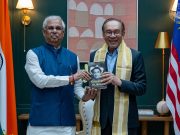



I write not as a political observer, nor as an interested bystander, but as a family member of one of the victims of the Putra Heights incident in April – a tragedy that upended lives, erased homes, and left families grappling with the slow, uneven process of rebuilding. I attended the recent Majlis Serah Kunci organised by the Ministry of Local Government Development (KPKT), hopeful that the ceremony would mark a dignified closure to months of hardship. Instead, what unfolded felt uncomfortably like a stage production, with the residents—still nursing wounds—cast as grateful spectators to a script written entirely for political applause.
Let us be clear: no one begrudges genuine assistance. The residents, my family included, appreciate every party that has contributed, whether financially, operationally, or emotionally. Rebuilding homes takes resources; rebuilding lives takes compassion. What rankles is not the support, but the spectacle—the unmistakable air of self-congratulation that permeated the event.
From the moment the ceremony began, it became evident that the narrative belonged not to the victims, but to those on stage. The Ministry positioned itself as the heroic saviour, the sole “champion” who had risen above the rubble to restore hope. One might almost forget that several other parties had also contributed—significantly, and in the millions—to the rebuilding efforts. But in the grand choreography of that morning, their roles were mysteriously edited out. Credit, apparently, is a limited commodity.
The most uncomfortable moment, however, came with the video presentation. One might assume a “serah kunci” event would honour resilience, celebrate rebuilding, and gently usher families towards closure. Instead, the video lingered gratuitously on scenes of devastation, charred homes, shattered belongings, the raw pain of the aftermath, before triumphantly pivoting to show the Ministry as the conquering hero that “delivered” the residents from despair. If the intention was to inspire gratitude, the effect was quite the opposite. It reduced suffering to symbolism, trauma to a storytelling tool, and residents to props in a narrative that glorified the Ministry’s role.
For families who lived that devastation, the experience was not cinematic. It was not footage to be replayed for dramatic effect. It was the day everything changed, the moment security vanished, the beginning of months spent navigating uncertainty, bureaucracy, and—ironically—long stretches of silence from the very Ministry now proudly claiming the mantle of saviour.
It is worth noting that many residents’ letters and complaints to the Ministry, including some addressed directly to the Minister, went unanswered for months. Follow-ups were made, doors were knocked on, emails were sent into the void. Assistance came, yes—but often slower than needed, and only after prolonged pleas. Yet the event glossed over these uncomfortable truths, preferring a narrative in which the ministry stood unwaveringly at the centre of every solution.
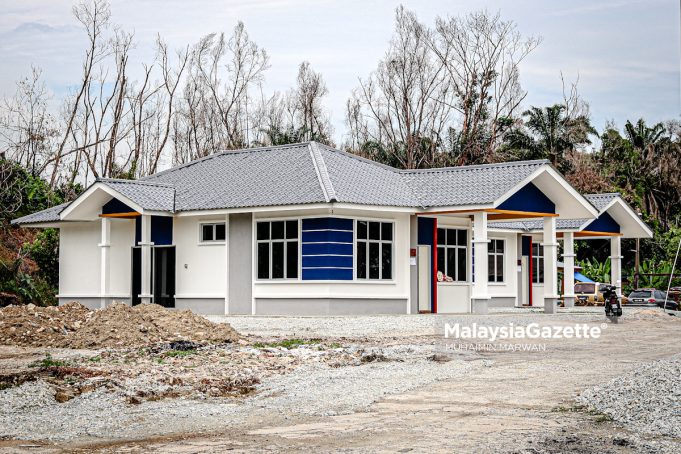
The homes handed over are appreciated—of course they are—but even that carries a nuance the ceremony conveniently omitted. The replacement houses are smaller than those that were lost. For some families, cherished memories built over years were reduced to rubble overnight. No ribbon-cutting ceremony can fully compensate for that, and certainly not one delivered in a tone that bordered on patronising.
What struck me most was the atmosphere in the hall. The residents were polite—they are, after all, grateful for the assistance—but beneath the applause was a quiet discomfort. Many felt the event was less about closure and more about claiming credit. An unspoken expectation hovered in the air, as though the residents ought to be perpetually indebted for the homes they received, grateful not only for what was given, but for the opportunity to publicly validate the ministry’s narrative of heroism.
Things happen—accidents, tragedies, failures of systems or circumstances. People recover at different paces
Gratitude is real, and so is fatigue. No one asked for perfection, only sincerity. But sincerity is built on humility, and humility was in short supply at that event.
The residents of Putra Heights did not attend the ceremony to become political accessories. They attended because they survived something unimaginable, endured months of emotional strain, and were finally receiving the keys to a new beginning. They deserved a ceremony that honoured them—not one that used their pain as a backdrop for a victory lap.
A concerned family member of a Putra Heights victim