


The continuing conflict involving Iran and the United States, together with growing instability around the Strait of Hormuz, should serve as a serious warning to Malaysia.
The prolonged crisis has already contributed to volatile global oil prices, rising shipping costs and disruptions in fertiliser and energy supply chains, exposing how vulnerable many countries remain to external geopolitical shocks.
Energy security can no longer be treated merely as a market issue or temporary political concern. In today’s interconnected world, war and geopolitical instability rapidly affect fuel prices, shipping costs, fertiliser supply, food production and ultimately the cost of living faced by ordinary people.
Malaysia may still produce oil and gas, but the country remains deeply vulnerable to external shocks. Our economy is heavily dependent on fossil fuel consumption, imported industrial inputs, private vehicle usage and global supply chains that are increasingly unstable.
Any disruption in major shipping routes or oil-producing regions will have direct consequences for domestic inflation and economic stability.
The recent increase in urea and fertiliser prices linked to instability in the Middle East is an early warning sign. Rising production costs in agriculture will eventually affect food affordability and place additional burdens on consumers. This demonstrates how energy insecurity and food insecurity are closely interconnected.
Malaysia must therefore move beyond short-term responses focused only on subsidies and crisis management. The country needs a long-term structural rethink of how energy is consumed, transported and managed.
One important reality often ignored is that Malaysia’s development model remains excessively dependent on private vehicles and highway expansion.
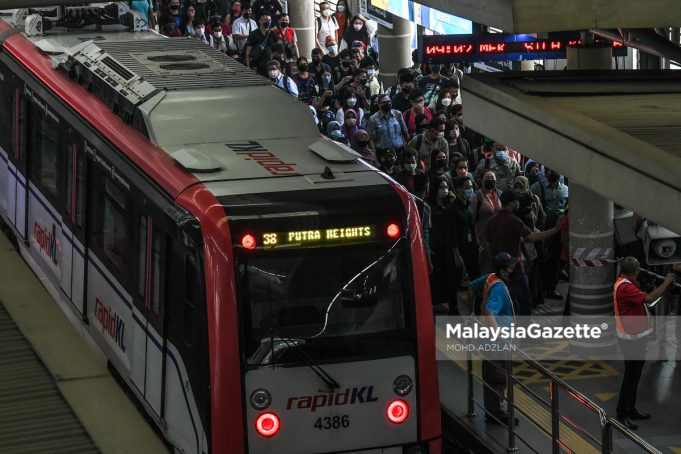
Despite decades of infrastructure spending, public transportation outside major urban centres remains inadequate, fragmented and inaccessible for many communities.
This dependency exposes the country to repeated fuel price shocks and rising household transport costs.
Public transportation should therefore be treated as a strategic national investment tied directly to energy resilience, economic stability and public welfare.
Expanding rail connectivity, modern bus systems and integrated transport networks would not only reduce fuel dependency but also lower long-term living costs for millions of Malaysians.
At the same time, energy demand management deserves far greater attention. National discussions frequently focus on increasing supply while neglecting excessive consumption patterns, inefficiency and wastage. Malaysia cannot continue assuming that energy demand will endlessly grow without consequences for public finances, the environment and national resilience.
The current global situation also highlights the need to strengthen local resilience. Overdependence on imported fertilisers, long-distance food supply chains and centralised energy systems leaves the country vulnerable during global disruptions. Greater support should be directed towards sustainable agriculture, local food production, decentralised renewable energy and community-level resilience initiatives.
Malaysia should not wait for a larger crisis before recognising that the era of cheap and stable energy is ending. The challenge ahead is not only about securing energy supply, but also about building a more efficient, resilient and socially equitable economic system capable of withstanding future global shocks.
Serious long-term planning today will be far less costly than reacting to repeated crises tomorrow.
—————
M.S. Anuar Mahmod
Secretary-General
RURAL MALAYSIA – Persatuan Pengguna Luar Bandar dan Ekologi Malaysia
-MalaysiaGazette