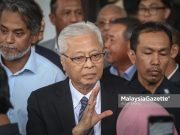




I welcome and support Prime Minister Datuk Seri Anwar Ibrahim’s announcement that the Universities and University Colleges Act 1971 (AUKU) will be abolished. For generations of students who have called for a freer and more democratic campus, this is an important and long-awaited commitment.
But an announcement is the beginning of reform, not its completion. The repeal must now be translated into legislation through an open, time-bound and genuinely student-led process. Its test will not be whether one statute disappears from the books, but whether the law that replaces it gives students a stronger voice and real institutional protection.
AUKU has for too long narrowed the civic space available to students: their freedom to associate, to speak, to organise and to participate fully in nation-building. Universities should develop citizens who can question, deliberate and lead. A campus cannot credibly teach democracy while treating student participation as something to be controlled.
The history of AUKU reform also reveals a recurring failure: private-higher-education students have repeatedly been left behind. Successive debates, amendments and reform proposals have focused overwhelmingly on public universities, while the Private Higher Educational Institutions Act 1996 (PHEIA or Act 555) has remained outside the centre of reform. Students in private institutions have been asked to wait, as though their freedoms and representation were secondary. This reform must finally break that pattern.
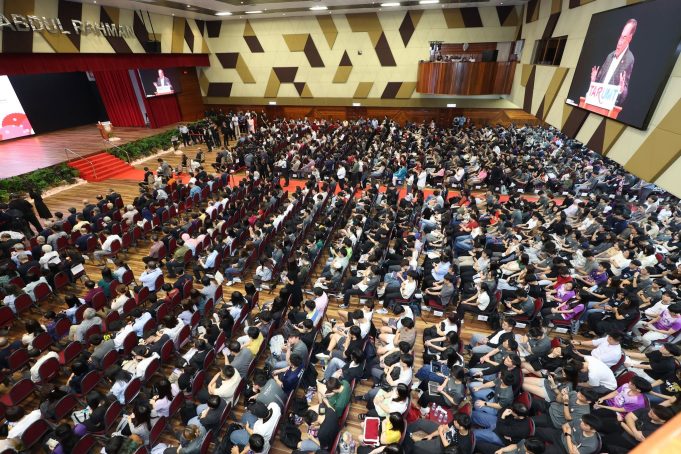
We must also confront the Private Higher Educational Institutions Act 1996 (Act 555), which governs students in private higher education, including those at TAR UMT. Its Part VIII retains a top-down framework over student discipline, expression and organisation. Among other things, it permits regulatory directions over student activities and provides powers to suspend or dissolve student bodies.
Most importantly, Act 555 does not itself expressly establish or guarantee an elected Student Representative Council as an autonomous statutory institution. In practice, the standing, independence and powers of a council can therefore remain heavily dependent on the institution’s constitution and the discretion of university management.
That gap cannot be ignored. Private-university students are no less entitled to dignity, representation and civic freedom than their peers in public universities. No reform of Malaysian higher education should be confined to the public university system alone.
This is consistent with the position I have taken throughout my years in the student movement. In 2019, I participated in a cross-campus student consensus defending freedom of speech and association and affirming that student movements must be led by students. In 2021, I joined students calling for AUKU to be abolished, a new Higher Education Act to be introduced and student unions to be rebuilt.
In 2023, as a former SRC president, I stood with TAR UMT students who raised concerns about management interference
in the campus election. The principle has remained the same: students must be free to organise, and their
elected representative institutions must answer to students rather than exist at the discretion of university
management.
A new higher education framework should therefore:
● expressly recognise elected Student Representative Councils and protect their institutional
independence;
● prohibit improper intervention in SRC elections, appointments, finances, statements and lawful
activities;
● guarantee students’ rights to organise, associate, speak, assemble and participate in public life;
● require meaningful student representation in decisions affecting student welfare, discipline, fees and
campus policy;
● provide transparent disciplinary procedures, independent appeal mechanisms and protection against
retaliation; and
● apply consistent minimum rights across both public and private higher education institutions.
The reform of AUKU must proceed together with a comprehensive reform of Act 555. The Government should consider a coherent, rights-based framework for the whole higher education sector, rather than preserving unequal freedoms depending on whether a student studies at a public or private institution.
The Government owes this reform to everyone who has been investigated, disciplined, suspended, intimidated or silenced for exercising a legitimate student voice – and to every generation of students who were taught, directly or indirectly, that citizenship ends at the campus gate. Their experiences must not be reduced to history; they must shape the safeguards written into the new law.
I therefore call on the Cabinet and the Ministry of Higher Education to publish a clear legislative timeline, release the proposed framework for public scrutiny, and ensure equal representation of public- and private-institution students in the drafting process. Student leaders, former student representatives, academics, civil-society organisations and higher education institutions must all be heard – but students must be at the centre.
Repeal will be meaningful only if it replaces control with trust, discretion with rights, and managed participation with genuine student power. This is Malaysia’s opportunity to build a higher education system that does not merely permit students to speak, but recognises them as partners in shaping our universities and our nation.
Wong Yew Lee
Former President, Student Representative Council
Tunku Abdul Rahman University of Management and Technology (TAR UMT)