



India, the world’s fourth largest economy, is soon edging to become the third largest, or possibly the second as highlighted by Prime Minister Narendra Modi while he was meeting the Indian diaspora in Malaysia earlier this month.
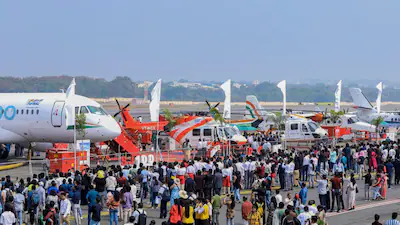
Likewise, its aviation growth exhibits impressive statistics as the third largest globally and the fastest growing, with a forecast 8 to 9 percent passenger growth over the next decade and close to tripling both its passenger growth and aircraft numbers over the next 15 to 20 years. Similarly, its aviation infrastructure is set to become even more robust with the number of airports set to exceed 200 from the current 160 in the next 10 years.
The aviation sector is a key enabler to sustaining economic heft while a nation takes a leap towards becoming fully developed. It supports business travel, trade, and movement of time-sensitive cargo for a rapidly growing economy.
The sector can also evolve into a microcosm of the overall economy with various ancillary activities that contribute to high income remuneration for those who are employed to participate in these activities. This is evidenced in the growing clout of the Indian maintenance, repair, overhaul (MRO) space, which is forecast to grow into a USD 9.5 billion sub-sector by 2035, tripling in size from what it is today.
Recent headlines, however, have begun to highlight some of the “growing pains” that India has begun to experience. Reports ranging from overstretched pilots to aircraft operating with lapsed certifications only point toward symptoms of a lack of capacity to accommodate the rapid growth of the third largest aviation market.
This growth needs careful planning, execution, and policy enablement. But, beyond that, it requires a carefully crafted governance structure that will not only help drive the growth but also secure the space for the nation that depends on this vital enabler.
Despite the burgeoning top-line growth figures, Indian aviation remains under-served with lower per capita air travel statistics as compared to its more developed market peers. The air travel per capita comparison, Trips Per Person Per Year statistics compared to India here appear quite stark: Brazil three to four times higher; China four to five times higher; Japan six to eight times higher; US 15 to 20 times higher; and the UK 20 times higher.
This highlights that the majority, particularly the lower strata of the middle class has never flown, making air travel highly income sensitive. Policies may need to address affordability factors, particularly for a rapidly growing middle class. Also, it may require out-of-the-box business models that allow for better access and connectivity to third and fourth tier cities and to larger less-developed or rural districts.
With India’s growing heft when it comes to aircraft orders and evolving strategic collaborations with select aircraft manufacturers, it clearly has volume leverage. With its renowned engineering institutional heft, India should begin detailing aircraft design modifications and, quite possibly, introduce innovative designs to better suit its market conditions to help boost air connectivity for such a promising aviation market.
With a wealth of human talent, particularly among its growing young population, India needs to develop a structured human capital development programme that will not only meet its current demands but future as well.
As an example, Indian airspace which needs critical management has a shortfall of over 23 percent air traffic controller (ATC) spots. Pilots, too, are in short supply with 1,150 to 1,450 of them required to enter the sector annually. India is forecast to require 14,000 to 34,000 aircraft engineers in the next eight to 15 years, two to five times its current strength of 7,000.
Further, certified and qualified Indian technical talent is always a prime target for foreign air carriers, particularly those based in the Middle East. This makes the need for urgent structural changes in human capital development programmes even more of a strategic necessity.
With growing affluence and the changing palate of the average Indian traveller, who is traversing the world, customer delight and specific people-handling skills become a necessity not only in the skies but also on the ground across the airport space. The need to better understand the craft of managing the discerning Indian traveller to manage airport facilities to match or beat regional competitor gateways, has become an imperative.The MRO space, as mentioned earlier, is set to grow into a USD 9.5 billion sector. Indian MRO costs may stack up at 20 to 30 percent lower than its regional competitors.
The lower productivity driven by limited training and certification; reduced emphasis on lean production practices; and supply chain bottlenecks with critical spares and equipment, the cost arbitrage is offset by longer turn around times (TAT), the opportunity cost for the airline not being able to effectively deploy the aircraft assets. Clearly, this is an area that requires focused attention to detail to capture the USD 9.5 billion prize and to grow it to offer greater global aviation one-stop-centre MRO services.
Upscaling the time-sensitive air cargo market is yet another area that needs to be explored and expanded. With India’s push into higher end manufacturing, particularly in the semiconductor space, ensuring improved air cargo connectivity becomes an imperative. In addition, with the growing affluence of the Indian consumer, sales of premium luxury products are said to be growing at a fast pace of 10 percent annually.
This is set to expand to five times its current size in the next 10 years. Further, e-commerce and online luxury could surpass a 25 percent share of purchases among millennials in India with rapidly rising digital adoption.
This suggests a lucrative air cargo market that could even justify stand-alone cargo airports interconnected with multimodal ground logistical interchanges.
Current global gateways and transit hubs are in Southeast Asia and the Gulf countries in the Middle East. Doha and Dubai stand out as the most transit intensive hubs at over 74 percent and close to 50 percent of estimated transit share, respectively.
Collectively, they act as a cross-continental bridge connecting Europe, Asia, Americas, and Africa. Whilst Singapore with a slightly lower estimated transit share of 30 percent acts as the cross-continental bridge connecting East Asia, Australasia, America, and Europe.
India, geographically at the centre of both these prime transit hubs, is blessed with a hinterland for substantial origin and destination traffic. It only appears befitting to explore the possibility of some of its large gateway airports transforming into global transit hubs.
Albeit there may be a need to review the airspace constraints due to geopolitical circumstances in and around the neighborhood of the subcontinent. The prospect of generating global transit and trans-shipment possibilities will only work toward bolstering India’s aviation growth story.
(The writer is an aviation management, policy and governance specialist, the former COO at the GMR Hyderabad International Airport, and a senior correspondent for the Malaysia Gazette. Views expressed in the above piece are personal and solely those of the author. They do not necessarily reflect News18’s views)