


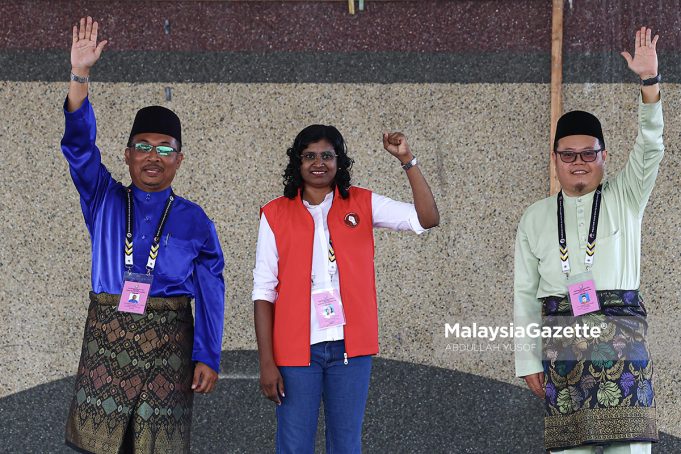
THE recent Ayer Kuning by-election, featuring two Islamic scholars and an Indian candidate, reinforces the argument that a viable third force in Malaysian politics remains a distant prospect.
In various forums, I have often remarked that the Chinese community in Malaysia, given the current political landscape, no longer possesses decisive influence over election outcomes. Borrowing a phrase from Hong Kong politics, I often say that Malaysian Chinese voters now “vote while holding back tears.” This expression captures a voter’s emotional dilemma: having to vote for a preferred party — in Malaysia’s case, the DAP and its Pakatan Harapan (PH) allies — not out of enthusiasm, but because the alternatives, namely MCA and Gerakan, seem even less palatable.
Historically, Chinese voters could choose among three options: DAP (or broadly, Pakatan Harapan), MCA (under Barisan Nasional), and Gerakan (currently aligned with Perikatan Nasional). For those disillusioned with Pakatan Harapan, MCA offered at least a symbolic alternative. However, with PH and BN now cooperating at the federal level — and generally avoiding electoral clashes — the MCA option has effectively vanished. Chinese voters today are left with a stark choice: either Pakatan Harapan or Perikatan Nasional. Given MCA’s longstanding difficulties in regaining Chinese support, Gerakan and PN face even slimmer prospects of winning over the Chinese electorate.
This political vacuum, in theory, offers an opportunity for a “third force” to emerge. If voters are disenchanted with Pakatan Harapan but equally uncomfortable supporting Perikatan Nasional, parties like MUDA or PSM could offer a middle ground. Historically, MUDA and PSM had little trouble attracting votes when they were allied with DAP or PKR — but that strength was never truly tested independently.
The first real test came during the 2022 Johor state election. While MUDA did not contest in the 2021 Melaka polls, its independent performance in Johor offered some insight. Setting aside constituencies where PH gave way to MUDA, thereby muddying the waters, the Larkin seat — where both MUDA and PKR contested — showed that MUDA garnered fewer votes than PKR. Nevertheless, their performance was considered decent for a young party.
However, in the six state elections of 2023, the MUDA-PSM alliance performed poorly. The Ayer Kuning by-election, which followed soon after, offered another critical test — albeit on a smaller scale — for evaluating the third force’s viability, even while acknowledging that generalisations should not be drawn from isolated by-elections.
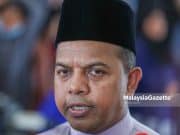
In Ayer Kuning, from a purely identity-based perspective, the dynamics were revealing. The candidates from Pas and UMNO were both individuals with strong Islamic credentials. For the Chinese community — traditionally the group most difficult for Pas to win over — this posed a significant hurdle. UMNO, under a more conservative and Islamic-inclined image, especially with figures like Akmal Saleh, did not present a particularly appealing alternative for non-Malay voters either.
Meanwhile, the third force nominated an Indian candidate, Bawani — known for her “Listen, Listen, Listen” viral moment — representing a fresh but challenging option. This by-election, arguably more than others, offered the clearest setting to assess whether non-Malay voters would abandon their traditional loyalty to the PH-BN pact and instead support an independent third force when presented with the opportunity.
The result was telling. Non-Malay voters, particularly the Chinese community, still largely refrained from supporting the third force. This does not imply that MUDA-PSM lacked popular sympathy, but rather that sympathy did not translate into actual electoral support — a critical distinction observed repeatedly in previous elections.
I have often argued that third forces like MUDA and PSM do not necessarily need to win seats to succeed. Achieving a respectable share of votes — enough to avoid losing their deposit — or strategically splitting votes to deny a PH victory would still signify relevance. A notable example is the Sungai Kandis seat in the 2023 Selangor state election, where MUDA’s vote share exceeded the winning margin of the PN candidate, indirectly influencing the result.
Unfortunately, neither outcome materialized in Ayer Kuning. Not only did the third force fail to reach a respectable showing, but their performance was significantly below expectations.
Thus, it is difficult to foresee a meaningful breakthrough for the third force in the near future. Although a strong third bloc would certainly contribute to the health of Malaysia’s democracy, the reality remains that, when it comes to the ballot box, the non-Malay community — particularly the Chinese — continues to ‘vote while holding back tears’.
Dr. Lau Zhe Wei
Assistant Professor
Department of Political Science
International Islamic University Malaysia