




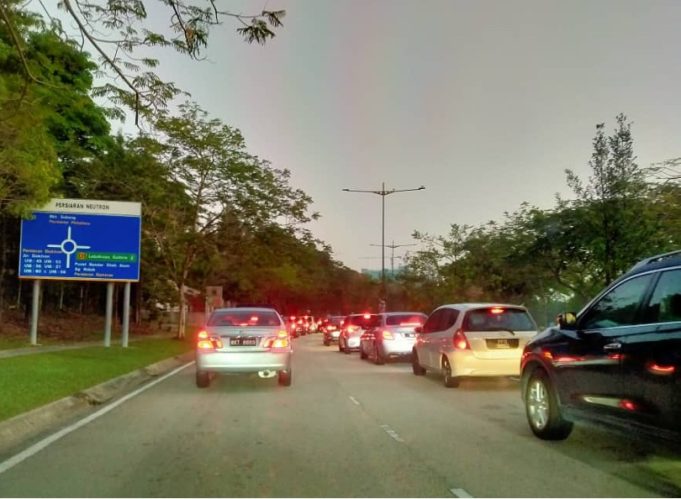
In the second part of “City of Elmina’s Broken Promises,” I turn my focus to the root rot which is fuelling the crisis: a profit-first mindset that has infected Selangor’s local councils and developers alike.
What is happening in the City of Elmina, which comprises Elmina East, Elmina West, Denai Alam and Bukit Subang, is not a one-off planning oversight – it is the result of a deeply entrenched culture where housing projects are approved for the revenue they bring in, not for how they affect the people who have to live with the consequences.
And nowhere is that failure more visible than on the roads – where residents sit, stuck in gridlock, day after day, wondering how this could happen in one of the State’s most “planned” communities.
They are not just frustrated. They are ready to punish those responsible. Politicians who drag their feet on this crisis, who offer vague promises and slow-moving solutions, will feel the blowback at the ballot box. The bureaucracy is thick, the red tape is everywhere – and Elmina is now the textbook case of what happens when systems serve themselves instead of the people.
The Approval Assembly Line
In Selangor, local councils like Majlis Bandaraya Shah Alam (MBSA) have become approval machines. Instead of acting as gatekeepers of urban well-being, they have turned into facilitators for developer profits. In turn, the local councils profit from assessments and other taxes.
Every housing project they approve brings in a flood of income – development charges, planning fees, land conversion premiums. This steady stream of money has become a crutch. Councils and other State Government Departments rely on it to balance their books, fund operations, and report growth. So naturally, they keep the approvals rolling – even when common sense says “stop.”
Need a traffic study? Tick the box. Need public consultation? Stage a meeting no one hears about. Need infrastructure upgrades? Leave it for “future phases.” The process has been hollowed out. What remains is a bureaucracy that pretends to plan sustainably, while actively undermining the very idea of sustainable development.
Developers Keep Pushing the Pedal
Developers are not innocent bystanders in this mess. They are the ones applying pressure behind the scenes. Many are publicly listed companies with earnings targets to meet and shareholders to please. To them, a delay in launch schedules is a financial threat.
So they do what they are incentivised to do: keep building. Keep applying for more land, or continue to build on land which is already theirs. In neighbouring Bukit Jelutong, the golf driving range is turning into another Sime Darby Property (SDP) housing project, much to the dismay of its residents. And later, when the pushback comes – whether from traffic congestion, angry residents, or failing infrastructure – they lean on the State and local councils to “make it work.”
SDP and others wrap their townships in branding about green living and vibrant communities. But behind the marketing is a different reality: one where internal roads double as regional bypasses, and residents waste hours in jams because no one thought how it is going to impact infrastructure when all the homes become occupied.
And it is costing people their quality of life.
The Thriving Bureaucracy
Anyone hoping for quick fixes will be disappointed. This is Malaysia, where red tape is alive and well. Elmina residents have sat through meeting after meeting with local authorities. Committees have been formed. Letters have been sent. Yet little changes.
MBSA continues to approve new projects. The Malaysian Highway Authority (LLM) and Public Works Department (JKR) pass the buck on access routes and highway connections. Every agency operates in its own silo. No one takes lead.
The only ones moving fast are the developers.
This inertia is not just inefficiency – it is negligence. Bureaucracy in this case is not just slowing down solutions; it is actively worsening the problem. The system moves, but in circles. And the people stuck in traffic know it.
A Broken Planning Philosophy
The heart of the problem lies in a broken planning philosophy: “Develop first, worry later.”
Selangor’s current development playbook prioritises land monetisation over urban integrity. Homes are built before roads. Schools and clinics are “coming soon.” Public transport is “in the pipeline.” But families move in today. And they are left fending for themselves.
What starts as a promise of modern living ends in chaos – and nobody takes responsibility.
No Checks. No Balances.
Why is MBSA allowed to greenlight so many projects when the road network is already overwhelmed?
Because there are no serious checks. No audit trails. No consequences. The State Government has not imposed any clear restrictions on overdevelopment in stressed areas. Even as congestion mounts, there is no formal mechanism to say, “Enough.”
The people supposed to enforce these checks – local council officers – are often behind-the-desk pen pushers who hardly know what’s going on on the ground. They approve plans they do not understand, rubber-stamp reports without question, and then hide behind procedures when things go wrong.
And this is not just a Shah Alam problem. The same scenario is playing out across other parts of Petaling, Hulu Langat and Gombak. The script is always the same: housing launches go full steam ahead, infrastructure lags behind, then the authorities act shocked when the public express discontent.
The Selangor Government needs to get off the sidelines. It must take control of urban development from local councils that have shown they cannot or will not regulate themselves.
What Needs to Happen Immediately
Residents in Elmina and beyond are not asking for miracles. They are asking for a functioning city. That has to starts with a hard stop to new approvals and a total system reset.
Here’s what must happen:
- Impose a moratorium on all new housing phases in Elmina, Denai Alam, and Bukit Subang until infrastructure catches up. If new projects are approved and launched in the City of Elmina before the traffic woes are solved, then the points I am making in this article, and the one before, are spot on.
- Conduct a full, independent audit of existing and past Traffic Impact Assessments – review their accuracy, assumptions, and accountability.
- Force developers to pay into an infrastructure fund that directly supports road upgrades, public transport, and bypasses.
- Create a real-time traffic and development dashboard to make data public and force transparency.
- Coordinate all planning through a State-level urban taskforce, acting as a one-stop agency, not scattered councils and other agencies working in silos. The right hand must know what the left is doing. On April 1, a catastrophic gas pipeline explosion occurred in Putra Heights, Subang Jaya, Selangor, resulting in a massive fireball that injured over 150 people and damaged 237 houses and 399 vehicles. This incident is a clear example of inadequate co-ordination and enforcement among State and Federal Government agencies as well as developers.
Elections Are Coming – And So Is Accountability
The residents of the City of Elmina are watching. And waiting. Politicians who think they can deflect blame or delay solutions until the next election cycle are making a grave mistake.
This isn’t a fringe issue. It touches thousands of voters every single day. Traffic is political. Quality of life is political. Property value is political. Already, the City of Elmina’s traffic issues have affected property values.
Come the next general election, residents will remember who took action – and who hid behind red tape.
Stop Approving. Start Governing.
The Selangor State Government and its local councils are standing at a fork in the road. One path leads to more of the same: jammed highways, frustrated citizens, declining trust, and angry voters. The other path requires courage: admitting failure, halting approvals, demanding accountability, and rebuilding trust through real reform.
There is no third option.
Stop pushing the paperwork. Stop blaming other departments. Stop pretending the system is working.
Fix the roads. Fix the oversight. Fix the culture of endless approvals.
Some residents may say otherwise. Some may console themselves by saying that property prices at City of Elmina are still above average. But to me, I certainly feel that I have bought into a failed township.
— (Datuk Seri Ashraf Abdullah is the former Group Managing Editor of Media Prima’s Television Networks, a journalist for 33 years and a Denai Alam resident).