



THE geopolitical conflict in the Middle East, particularly involving Iran, the United States and regional allies, is no longer merely an issue of international relations. It has become a key driver of global economic instability, with direct implications for countries like Malaysia.
The region plays a critical role as both a major oil-producing hub and a key artery for global energy trade. Each escalation in tension does not remain confined to geopolitics but reverberates across the economic system through rising energy prices, higher logistics costs and mounting inflationary pressures.
What we are witnessing today is not simply an oil crisis. It exposes structural vulnerabilities in the global economy and highlights how countries like Malaysia remain exposed to external shocks.
From conflict to global economic pressure
History has shown that conflicts in the Middle East are closely linked to oil price shocks. The 1973 Oil Crisis, the 1979 Iranian Revolution and the 1990–1991 Gulf War all demonstrated that even the anticipation of supply disruptions is sufficient to trigger sharp increases in energy prices.
Today’s oil market responds not only to actual disruptions but also to perceived risks.
In the current situation, the key risk lies not only in production but also in strategic chokepoints such as the Strait of Hormuz, which handles approximately one-fifth of the world’s oil supply. Any disruption to this route could trigger a sharp and prolonged price surge.
These effects cascade across the economy. Higher energy costs lead to increased production and logistics expenses, ultimately driving up the prices of goods and services. In certain conditions, the global economy may even face stagflation — a combination of high inflation and slow growth.
Systemic disruptions to global supply chains
The impact of this crisis extends beyond the energy sector, placing pressure on global supply chains as a whole.
Rising energy prices have increased industrial input costs, including fertilisers that are heavily dependent on natural gas. This has led to a sharp increase in fertiliser prices globally.
In Malaysia, the impact is already being felt. Local fertiliser producers have faced raw material cost increases of between 100% and 150% within a short period. As fertilisers account for a significant portion of agricultural production costs, this pressure is expected to translate into higher food prices in the coming months.
Beyond the food sector, the crisis is also affecting strategic industries. Malaysia, as an important hub in the global semiconductor supply chain, faces risks from disruptions in the supply of critical materials such as helium. If prolonged, this could affect production capacity and weaken the competitiveness of the country’s high-technology industries.
This situation demonstrates that the current crisis is no longer confined to a single sector but affects the entire economic system.
Malaysia at the intersection of global pressures and domestic policy
As an open economy, Malaysia cannot escape these global pressures.
While the country may benefit from higher oil revenues, the negative effects on the domestic economy remain significant. Import costs are rising, particularly for refined petroleum and food, while global uncertainty is affecting investment flows and currency stability.
The real challenge lies in how these global pressures interact with domestic policies.
The rationalisation of fuel subsidies, including diesel price adjustments, has accelerated the transmission of global pressures into the domestic economy. From a fiscal perspective, such measures are necessary. However, in an environment of volatile global prices, they also increase the burden on households and businesses.
The issue is not whether subsidies should be rationalised, but when and under what economic conditions such measures should be implemented.
When the pressure reaches the people
Ultimately, the impact is felt directly by the rakyat.
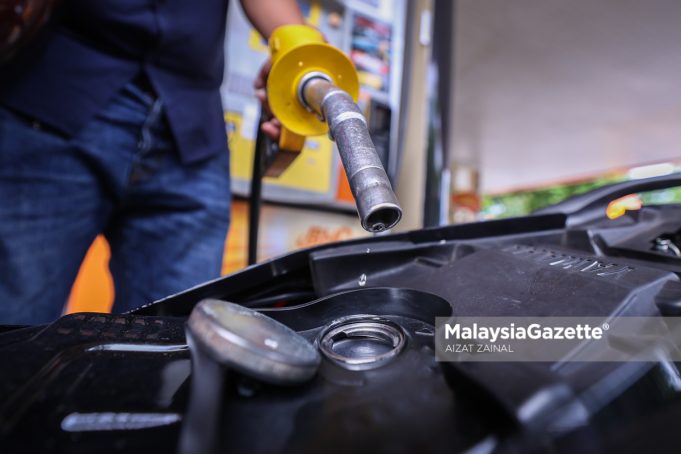
Higher fuel prices increase transportation costs, which are then passed on in the form of higher prices for food and essential goods. At the same time, rising agricultural input costs such as fertilisers further intensify pressure on food prices.
Low-income households are the most affected, as a large portion of their income is spent on basic necessities. However, these pressures are increasingly being felt by the middle-income group as well.
In this context, gaps in the implementation of targeted subsidies remain evident, particularly within the informal sector, as well as among micro, small and medium enterprises (MSMEs), cooperatives and logistics players that form the backbone of the food supply chain.
There is also an urgent need to accelerate economic census efforts for the informal sector to ensure that policies can be targeted more effectively.
Policy dilemmas and the need for strategic intervention
The government now faces a difficult trade-off between fiscal sustainability and protecting the rakyat.
While subsidy rationalisation is necessary for managing public finances, rising living costs require careful and calibrated intervention. A gradual approach is essential to avoid sudden price shocks to the economy.
At the same time, additional revenues from the oil sector should be strategically utilised as a temporary buffer to mitigate short-term impacts on households.
Measures such as expanding targeted subsidies, supporting logistics and MSMEs, and strengthening enforcement against profiteering should be prioritised.
In certain circumstances, additional support measures such as targeted loan moratoriums, wage subsidies and direct assistance to small businesses should also be considered to ensure the resilience of the domestic economy.
Building a more resilient economy
This crisis offers a clear lesson.
Malaysia can no longer rely on an economic model focused solely on growth, but must build an economy that is more resilient to external shocks.
This includes strengthening energy security, reducing dependence on imported refined petroleum, and considering the development of strategic oil reserves at sufficient scale to withstand global supply disruptions.
At the same time, food security must be treated as a core economic priority. Investments in domestic production, logistics and supply chains must be strengthened to reduce dependence on external factors.
More importantly, economic policies must be designed to absorb shocks, rather than merely react after crises occur.
Conclusion
The conflict in the Middle East is not merely a geopolitical crisis, but a test of the structural resilience of Malaysia’s economy.
It highlights the country’s continued exposure to external shocks that ultimately translate into rising living costs for the rakyat.
Regardless of whether the conflict escalates or stabilises, Malaysia will be affected and must be prepared.
The question is no longer whether crises will occur, but how well the country is able to respond.
Malaysia requires a more balanced economic approach — one that not only pursues growth but also ensures stability and the well-being of its people.
Otherwise, every global crisis will continue to translate into daily pressures on the lives of Malaysians.
Dr. Haim Hilman Abdullah
Chairman,
Pas Central Economic and Entrepreneur Development Committee / Member of the Kedah State Executive Council (Chairman of the Industry & Investment, Higher Education, and Science, Technology & Innovation Committee)