




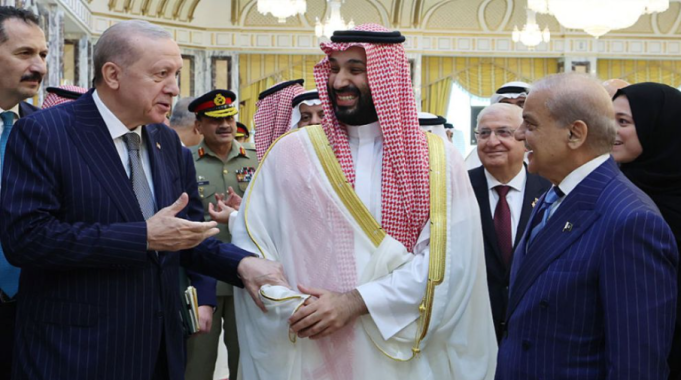
ASEAN’s strategic community is keenly observing Bangladesh’s expressed interest in joining the pact, particularly as current global tensions heighten uncertainty in both trade and security and established alliances are recalibrated.
Against this backdrop, many developing countries are pursuing strategic autonomy—avoiding exclusive alignment with any major power bloc so that they can safeguard continued economic growth, national stability and the prosperity of their people.
Malaysia offers a relevant example. As a fast-growing member of the Association of Southeast Asian Nations (ASEAN), it has maintained close and cordial economic relations with China despite maritime disputes in the South China Sea. At the same time, Malaysia continues defence exercises and security cooperation with Australia, New Zealand, Singapore, the United Kingdom and other partners, while avoiding rigid alignment with any single geopolitical camp.
Bangladesh faces comparable geopolitical constraints. It too could pursue strategic autonomy by maintaining broad economic and defence relationships without entering formalised military pacts that might restrict its diplomatic flexibility, import external rivalries or undermine its own economic growth and development.
The Economic Case for Strategic Autonomy
The recently announced Mecca Joint Defence Pact raises an important question for Bangladesh: whether closer political and defence relations should extend to a formal collective-security commitment. The central issue is not diplomatic symbolism, but whether membership could constrain Bangladesh’s economic choices, unsettle key partners and expose a trade-dependent economy to avoidable costs.
Bangladesh has strong reasons to deepen relations with Saudi Arabia, Türkiye and Pakistan. These relationships can support employment, remittances, energy security, investment, technology and defence-industry cooperation. Yet such benefits can be secured through bilateral and sector-specific arrangements without accepting obligations that may complicate relations with other major economic partners.
The distinction is therefore between broad partnership, which expands national options, and formal alignment, which may narrow them.
Malaysia: Multi-dimensional Cooperation Without Security Alliance Entrapment
Malaysia provides a useful comparison. It combines close economic ties with China, extensive commercial and security relationships with Western and regional partners, and active engagement with the Middle East. Its approach is pragmatic: cooperate widely, preserve access to markets and investment, and avoid commitments that could force a binary geopolitical choice.
Malaysia’s defence partnerships have generally been used to strengthen national capability and regional stability rather than to place the country within a rigid global bloc. This allows Kuala Lumpur to maintain economic engagement with competing powers while retaining room to respond to changing trade, technology and investment conditions.
The lesson for Bangladesh is straightforward: strong defence relationships need not require exclusive strategic alignment.
Economic Exposure Matters More Than Alliance Optics
Bangladesh’s development model depends on diversified external relationships. Export markets, imported fuel and industrial inputs, remittance corridors, development finance, infrastructure investment and technology partnerships are spread across countries with different strategic outlooks. Preserving confidence across this network is essential to continued growth.
A formal military alignment could be interpreted by some partners as a shift in Bangladesh’s geopolitical position, even if Dhaka intended it only as a gesture of solidarity. The resulting backlash might not take the form of direct sanctions. It could instead appear through greater scrutiny of exports, slower investment approvals, tighter financing, higher insurance costs, delayed infrastructure cooperation or reduced willingness to extend favourable commercial terms.
For a large and increasingly integrated economy, even modest changes in market confidence can affect factory orders, employment, foreign-exchange availability, energy prices and the cost of public borrowing. These practical consequences deserve greater weight than the short-term diplomatic prestige of joining a new security grouping.
The appropriate test is therefore economic: would membership materially strengthen Bangladesh’s security without weakening the commercial relationships on which its development depends?
Alliance Commitments Can Generate Indirect Costs
Collective-defence commitments can create economic exposure because a member may face pressure to support decisions or crises over which it has limited control. Diplomatic backing, logistical access, intelligence cooperation or other forms of participation can affect shipping routes, energy costs, investor sentiment and access to technology and finance.
For Bangladesh, the risk is not necessarily immediate military involvement. It is the gradual loss of flexibility as partners, investors and markets begin to price geopolitical affiliation into commercial decisions.
Bangladesh’s immediate priorities are growth, employment, export competitiveness, energy security and investor confidence. A policy that introduces uncertainty into these areas should be approached cautiously, particularly when the same practical benefits can be obtained through narrower agreements.
Bangladesh is also entering a more demanding phase of economic development in which export diversification, investment quality and financing costs will matter more. At such a moment, policy credibility and predictability are valuable national assets. Any external commitment that creates doubt about market access, supply chains or the treatment of foreign capital could make this transition more difficult.
Remittances are equally important. Overseas employment links Bangladesh to the Gulf, Southeast Asia, Europe and other regions. Maintaining constructive relations across these markets protects household incomes and foreign-exchange inflows. Strategic autonomy supports this objective by allowing Dhaka to engage partners on their economic merits rather than through the lens of bloc politics.
A More Flexible Alternative
Bangladesh can deepen trade, investment, energy, technology and defence cooperation with the pact’s members while remaining outside an automatic collective-defence obligation. Bilateral agreements can provide training, technology transfer, industrial partnerships and professional exchanges without importing wider geopolitical risks.
Dhaka could also engage the framework as an observer or dialogue partner, allowing it to participate in selected initiatives while preserving sovereign discretion over each commitment. This would capture many of the practical benefits of cooperation without weakening Bangladesh’s ability to trade and invest across competing markets.
This approach would also strengthen Bangladesh’s bargaining position. A country that retains multiple sources of trade, finance, energy, infrastructure and technology can negotiate more effectively and avoid excessive dependence on any one partner. Strategic autonomy is therefore not merely a diplomatic posture; it is a form of economic risk management.
Conclusion: Protect the Growth Dividend
Bangladesh should judge the Mecca Pact against a clear national-interest standard: demonstrable security gains, limited obligations and no disproportionate cost to trade, investment, remittances, financing or public welfare. At present, the economic case for formal membership remains uncertain.
The wiser course is strategic autonomy: maintain close relations with all major partners, cooperate selectively on defence and security, and avoid commitments that could trigger commercial backlash or reduce policy flexibility. In a divided global environment, Bangladesh’s ability to remain economically connected across competing blocs is not indecision; it is a valuable development asset.
By Ravindran Devagunam
The author is Senior Correspondent, Foreign Policy and Politics, Malaysia Gazette